 Bernadeth Marie
The Bloomsbury Group was a circle of writers, artists and intellectuals from the Bloomsbury district of London.
Bloomsbury Group Members:
The Bloomsbury Group originally started off with 10 members and later expanded:
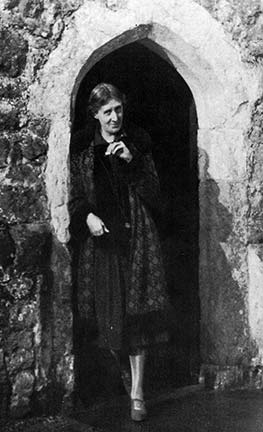
Virginia Woolf, writer
E.M. Forster, writer
Lytton Strachey, writer
Leonard Woolf, writer
Roger Fry, artist
Vanessa Bell, artist
Clive Bell, art critic
John Maynard Keynes, economist
Duncan Grant, artist
Desmond McCarthy, journalist
The “Bloomsberries,” as they were called, were mostly privileged and well-educated members of the upper middle class. Yet, what separates them from other intellectual groups at the time was that they were the only group to support gay rights, women in the arts, pacifism, open marriages, uninhibited sexuality and other unconventional ideas.
Having grown up in Victorian households, the Bloomsbury Group openly rejected the old Victorian ideals from their childhoods and adopted more liberal and progressive attitudes.
Seeing Victorian society as prudish and narrow-minded, they chose to live freely and unrestricted. As the book “Great World Writers: Twentieth Century” explains: “In short, they were determined to reinvent society, at least within their own circle.”
The Bloomsbury Group Origin Story:
The Bloomsbury Group began when Virginia Woolf’s father, Sir Leslie Stephen, died in 1904, prompting Virginia and her three siblings, Thoby, Vanessa and Adrian, to move from Hyde Park Gate into a home in Gordon square within the Bloomsbury district.

Thoby Stephen then began inviting his friends from Trinity College: Leonard Woolf, Lytton Strachey and Clive Bell, to the Stephen’s home on Thursday nights for parties, during which they met Virginia and Vanessa and openly discussed taboo and controversial topics.
After Thoby Stephen died in 1906 and Vanessa married Clive Bell in 1907 and took the Gordon Square home for themselves, Adrian and Virginia moved to a house in Fitzroy Square where they continued their Bloomsbury parties, according to a memoir Duncan Grant wrote about Virginia Woolf in 1941:
“The study on the ground floor had the air of being much lived in. It was to this room that their friends came on Thursday evenings – a continuation of those evenings which began in Gordon Square before Thoby Stephen died and before Vanessa married. It was there that what has since been called ‘Bloomsbury’ for good or ill came into being. About ten o’clock in the evening people used to appear and continue to come at intervals till twelve o’clock at night, and it was seldom that the last guest left before two or three in the morning. Whisky, buns and cocoa were the diet, and people talked to each other. If someone had lit a pipe he would sometimes hold out the lighted match to Hans the dog, who would snap at it and put it out. Conversation; that is all. Yet many people made a habit of coming; and few who did so will forget those evenings. Among those who constantly came in the early days were Charles Sanger, Theodore Llewelyn Davies, Desmond McCarthy, Charles Tennyson, Hilton Young (now Lord Kennet), Lytton Strachey. It was certainly not a ‘salon.’ Virginia Stephen in those days was not at all the sort of hostess required for such a thing. She appeared very shy and probably was so, and never addressed the company. She would listen to general arguments and occasionally speak, but her conversation was mainly directed to someone next to her.”
Although progressive, the Bloomsbury Group members were often accused of being snobbish, wealthy elitists with no self-control. Critics of the group claimed they looked down on the lower classes as well as other artists and writers outside of their group.
Bloomsbury Group Books:
As artists and writers, the Bloomsbury group produced an impressive body of work. Virginia Woolf wrote and published many influential literary books such as Mrs. Dalloway, A Room of One’s Own and To The Lighthouse.
Lytton Strachey wrote a groundbreaking biography titled Eminent Victorians and E.M. Forster wrote many classics such as A Passage to India and A Room With a View.
The Bloomsbury Group writers, who were heavily influenced by American writers like Walt Whitman, were inventive and adventurous and were always trying to reinvent literature, according to a memoir written by Virginia’s niece, Ann Stephen Synge, published in The Bloomsbury Group: A Collection of Memoirs and Commentary:
“She [Virginia Woolf] was always bubbling with ideas, longing to launch new schemes and produce books that no one had thought of before, that would startle the conventional business minds of the book world.”
Bloomsbury Group Art:
Vanessa and Clive Bell, Duncan Grant and Roger Fry were productive artists who held highly acclaimed art exhibits throughout London. Roger Fry organized the first post-impressionist art exhibit in London in 1910. The group’s art was greatly influenced by post-impressionist and cubist painters such as Matisse and Picasso.
“As for us we’re in a huge state of excitement having just bought a Picasso for £4. I wonder how you’d like it. It’s ‘cubist’ and very beautiful colour, a small still life,” – Vanessa Bell in a letter to Virginia Woolf on October 19, 1911.
The Bloomsbury Group and the Dreadnought Hoax:
The group was also known for its playful side. In 1910, some members of the Bloomsbury group, including Virginia Woolf, made national headlines when they dressed up as Abyssinian ambassadors and tricked the British Navy into giving them an exclusive tour of their flagship, the Dreadnought, in an incident that came to be known as the Dreadnought Hoax.

By the 1930s, the Bloomsbury group began to fall apart. Several members died suddenly, including Lytton Strachey in 1931, followed by Dora Carrington’s suicide shortly after and Roger Fry’s accident in 1934.
In 1937, the death of the first Bloomsbury group child, Julian Bell, hit the group especially hard. In 1941, with the possibility of a Nazi invasion looming and suffering from another bout of depression, Virginia Woolf killed herself. John Maynard Keynes died five years later in 1946 and Leonard Woolf passed away in 1969.
The last surviving member of the group was Duncan Grant, whose death in 1978 officially brought the Bloomsbury group to an end.
Sources:
Great World Writers : Twentieth Century, Volume 1; Patrick M. O’Neil; 2004
The Bloomsbury Group: a Collection of Memoirs and Commentary; Stanford Patrick Rosenbaum; 1995
Tate Gallery: Archives Journeys: Bloomsbury Art: Vanessa Bell, influences and experimentation: http://www2.tate.org.uk/archivejourneys/bloomsburyhtml/art_bell_influences.htm